London · Greater London · England
London Biofoundry
Imperial College London
End-to-end design–build–test–learn capability for strain engineering and cell-free systems; reconfigured its robots for COVID-19 diagnostics in nine days.
About
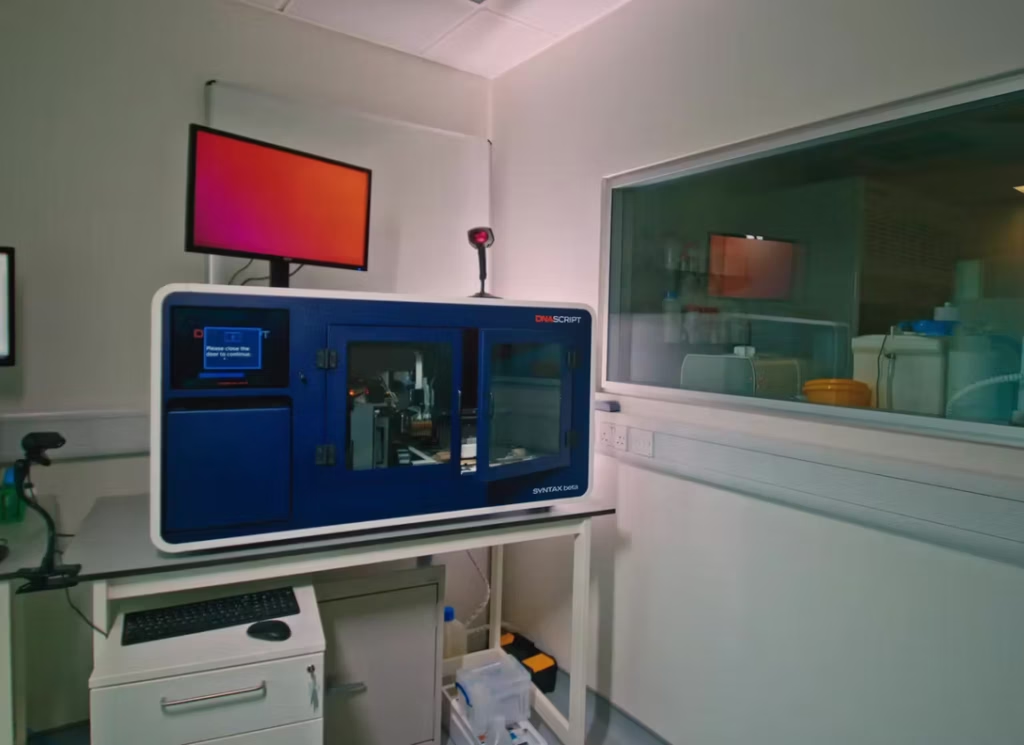
The London Biofoundry applies engineering biology to design, construct and functionally characterise synthetic DNA and engineered organisms. Grown out of the London DNA Foundry and operated in partnership with SynbiCITE, it provides end-to-end, automated design–build–test–learn capability to partners from startups to multinationals.
It specialises in high-throughput strain engineering, cell-free technology and the rapid prototyping of biological workflows, supporting large DNA assemblies above 50 kilobases including chromosome-scale synthesis. During the pandemic the team reconfigured its liquid-handling robots into a validated SARS-CoV-2 diagnostic platform in around nine days — a blueprint published in Nature Communications.
Focus areas
- High-throughput strain engineering
- Cell-free systems
- Synthetic DNA engineering
- Biosensors & diagnostics
- Commercial translation
Notable work
SARS-CoV-2 diagnostics
Automated clinical testing workflows designed in ~9 days as a blueprint for the NHS and lower-resource labs.
Read more ↗